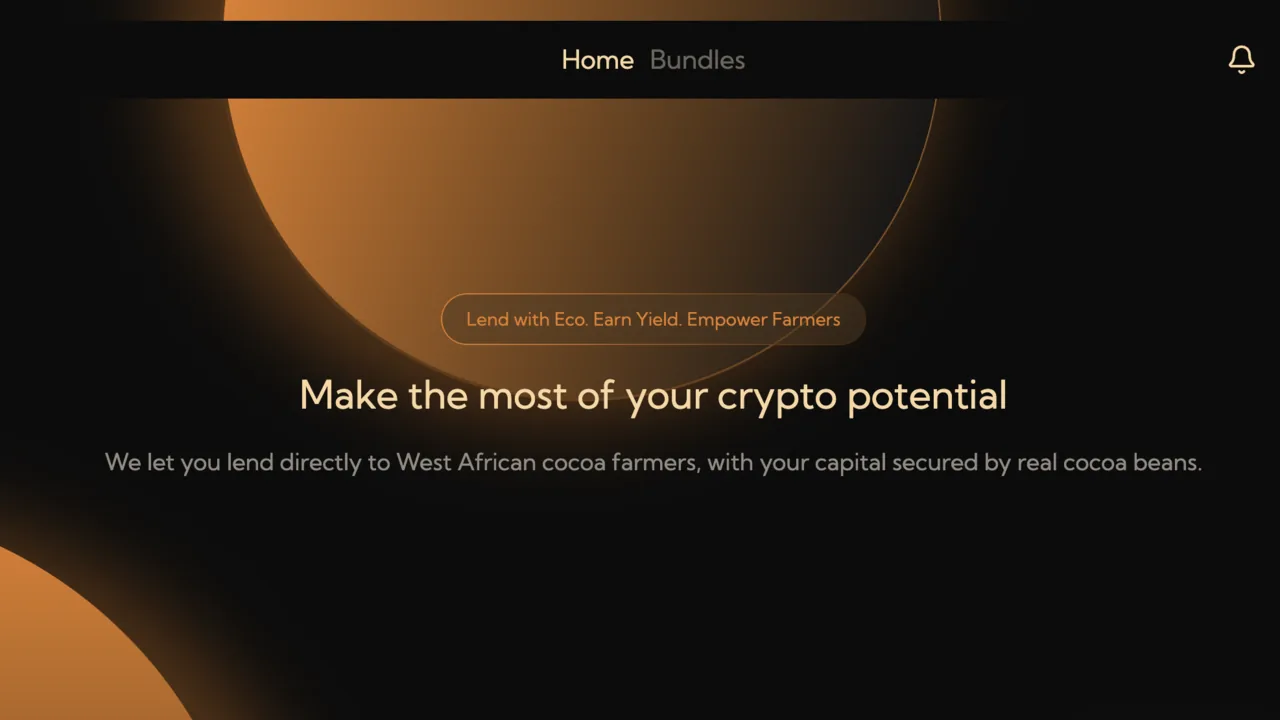
A physical commodity, tracked end to end and used as collateral. The domain model follows the cocoa itself: a sack is registered to a farmer and stays trackable, sacks are combined into bags held at a shed, bags into batches and bundles, and a delivery transports them — issuing NFTs for the consignment along the way. The warehouse position becomes a warrant receipt backed by a sack-ownership service, and lenders open and top up positions against those receipts, so a farmer gets financed against stock that is provably theirs.
It runs on its own permissioned network, not a testnet toy: a full Hyperledger Fabric deployment (orderer, peers, CA, channel config and chaincode-as-a-service) behind a gateway that submits every state change to the ledger.
Built for the field and for West Africa specifically — farmer KYC with ID and profile capture, payouts through local providers with exchange-rate handling, SMS notifications, and a mobile app with an explicit offline sync module for areas without connectivity.
The on-chain financial layer covers an ICO with whitelisting and Uniswap-V3/Chainlink pricing, lending with receipts, staking, a vault and vesting.